
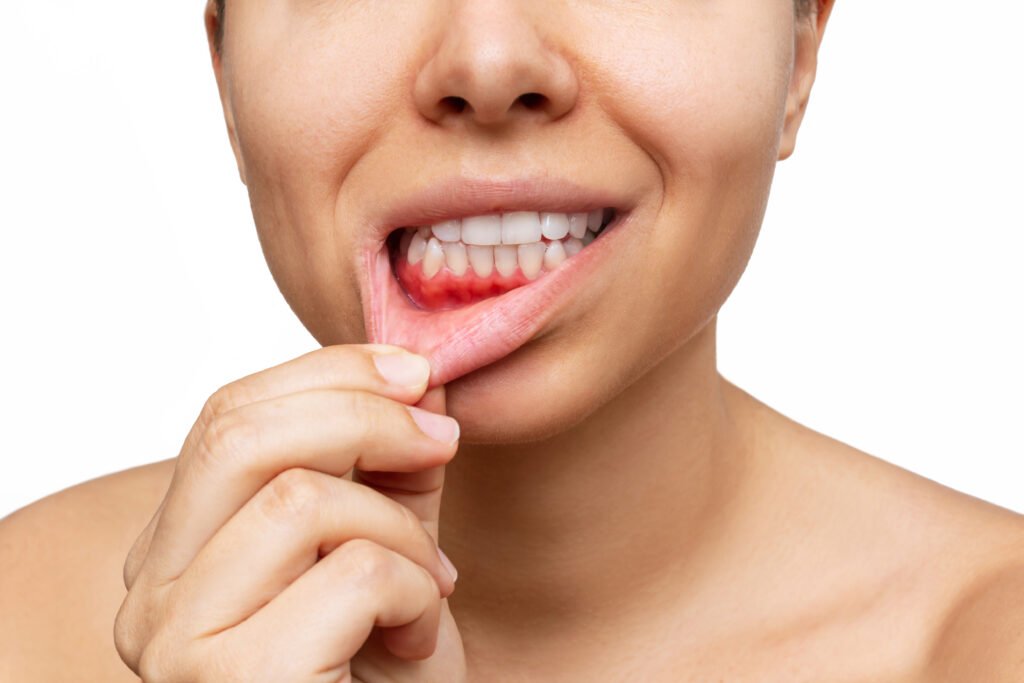
Periodontal disease affects more than your mouth. Bacteria live in your gums, and these bacteria can travel through your bloodstream. When inflammation spreads beyond the mouth, other body systems respond. Understanding this link helps you manage your condition with the full picture in mind.
Protect Your Gum Health
Gum tissue changes in stages:
- Gingivitis is the early stage, where gums look red and are tender, but damage is still reversible.
- Periodontitis develops if gingivitis goes untreated, causing the bone supporting your teeth to break down.
- Advanced periodontitis leads to loose teeth as bone and gum tissue break down, often requiring a referral to a periodontist.
Your gums also reflect your overall health. Medications, hormonal shifts, and stress affect how quickly bacteria grow and how well your body responds. Recognizing these connections helps you understand why consistent gum care matters. Regular cleanings remove hardened tartar, and consistent home care slows gum problem progression. Attending every scheduled cleaning gives your care team a clear view of how your gums respond over time.
Understand the Connection
The mouth-body connection describes how oral bacteria interact with your wider health. Inflammation in your gums does not stay contained. This response can influence conditions in other systems, so managing gum inflammation supports broader stability. Not all bacteria behave the same way. Your body fights them, but prolonged immune activity strains multiple systems. Over time, this sustained response may contribute to inflammation elsewhere in the body. Research points to links between periodontal disease and cardiovascular health. The relationship is not fully mapped, but oral bacteria outside the mouth suggest the link is more than coincidental. Sharing your periodontal history with your physician gives both providers a clearer view of your overall inflammation levels.
Build Your Oral Wellness
Good habits are simple to describe. Brush twice daily, floss once daily, and schedule professional cleanings. These steps remove plaque before it hardens, and reduced plaque means less irritation for your gums. Brushing technique matters as much as frequency. Use a soft-bristled brush, and angle the bristles toward your gumline, since this position clears bacteria where gums and teeth meet. Brush for two minutes, and divide your mouth into sections so no area gets rushed. An electric toothbrush can help if manual brushing is difficult or inconsistent. Flossing reaches spaces your brush cannot. Slide floss gently below the gumline rather than snapping it against the tissue, and curve it around each tooth to clear pocket walls.
If standard floss is uncomfortable, interdental brushes or a water flosser are alternatives. Your dentist can show you which tool fits your pocket depth and dexterity. Rinsing with antimicrobial mouthwash adds protection. It reduces bacteria in areas your brush and floss may have missed, and it supports healing in irritated gum tissue. Ask your dentist whether a prescription-strength rinse is appropriate for your current stage of periodontal disease.
Treat Periodontal Disease Today
Periodontal disease connects to your overall health, and managing it protects more than your smile. Schedule an evaluation with your dentist, and ask about scaling, cleanings, and a maintenance plan suited to your condition. Since small daily habits combine with professional care, you gain steady control over both your gums and your systemic health. Book your appointment today.