
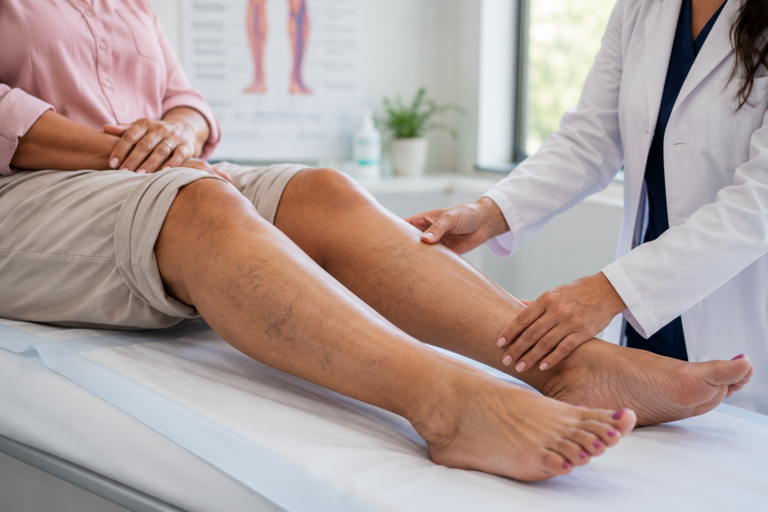
Chronic venous insufficiency (CVI), which begins in the veins of the legs, occurs when weakened or damaged veins have difficulty returning blood to the heart. Its influence can extend far beyond swollen ankles or aching calves, and understanding this connection is key for informed decision-making. Here is more information on chronic venous insufficiency, its causes, how it affects overall health, and how a specialist can help:
What Is Chronic Venous Insufficiency?
Chronic venous insufficiency is a condition in which the veins in the legs struggle to return blood to the heart. Healthy veins contain small valves, and these valves keep blood flowing upward toward the heart. When these valves weaken or become damaged, blood pools in the lower legs, a process known as venous reflux, which raises pressure inside the veins over time.
What Causes It?
Several factors contribute to CVI, with damaged valves as the central issue. Common causes and risk factors include:
- A history of deep vein thrombosis (blood clots)
- Prolonged periods of standing or sitting
- Age, pregnancy, obesity, and a family history of vein disease
- Hormonal changes
How Is Overall Health Connected?
The veins do not work in isolation. Poor venous circulation can signal or contribute to broader health concerns, and when blood pools in the legs, tissues receive less oxygen and nutrients. This slows wound healing, and it raises the risk of skin infections. Patients with untreated CVI may face a higher chance of developing venous ulcers that resist standard treatment protocols.
CVI is linked to cardiovascular health; the condition sometimes appears alongside other circulatory problems. Reduced mobility from leg pain can lead to weight gain and decreased activity levels, both of which place additional strain on the body. Swelling and discomfort disrupt sleep and limit daily function. Because these symptoms compound over time, a vein condition in the legs can affect many interconnected aspects of a patient’s overall health.
Blood clots represent a serious concern. When circulation slows, the risk of clot formation rises, and a clot that travels to the lungs can become life-threatening. This connection shows why vein health extends beyond cosmetic appearance or physical comfort, which makes early evaluation and treatment integral to long-term well-being.
How Can a Specialist Help?
A vascular specialist evaluates vein function, and they identify the underlying cause of symptoms. The process begins with a physical examination and an ultrasound, which is a painless imaging test that shows how blood moves through the veins. This information allows the specialist to confirm a diagnosis. Severity determines the next steps.
Treatment options vary and range from conservative measures to minimally invasive procedures, depending on the stage of the condition. Compression stockings, leg elevation, and regular movement help patients manage early symptoms. For more advanced cases, specialists offer treatments such as endovenous laser treatment and sclerotherapy; these procedures close or seal faulty veins so that blood redirects to healthier vessels. A specialist monitors progress over time and adjusts the treatment plan as the condition changes.
Visit a Vascular Vein Center
Chronic venous insufficiency starts in the legs, but its effects reach into circulation, skin health, mobility, and daily comfort. The condition develops when vein valves weaken and blood pools in the lower legs; it connects to concerns ranging from slow wound healing to blood clots. Recognizing the symptoms early and understanding the causes helps patients protect their health. If you notice swelling, aching, heaviness, or visible varicose veins, schedule an evaluation with a vascular specialist today.